
Everyone talks about data-driven healthcare, yet most quality teams still struggle to get clear answers from their data. You can buy reporting tools, dashboards, and AI add-ons, but they rarely change outcomes on their own. The real blocker is day-to-day reality: data is hard to access, inconsistent across systems, and too complex to use without technical help.
That gap hits hardest in small and mid-sized hospitals and clinics (SME). They face the same quality and reporting pressure as large systems, but usually don’t have a dedicated analytics team, data engineers, or budget for heavy enterprise tooling. So quality teams rely on what’s available, manual extracts, late reports, and “best guess” calls, when they really need fast, defensible answers.
That’s why advanced analytics in healthcare often stalls after the first rollout. It takes more than algorithms. It requires data readiness and operationalization: clean, connected, and trusted data that is available quickly for high-quality work, along with a setup that allows non-technical users to explore and drill down safely.
Edenlab bridges the gap between ambition and execution through our healthcare data analytics services. We help providers prepare and operationalize healthcare data for near-real-time, AI-ready analytics. When a self-serve analytics layer makes sense, we implement Kodjin Analytics on top of that foundation, so quality teams can work with consistent definitions, explore cohorts, and act faster without relying on report requests.
In this article, we’ll show what “advanced” looks like in practice through a readmission prevention lens: temporal analysis of the full care journey, how to confirm whether a readmission problem exists, where it concentrates, and which patterns explain it, so teams can intervene earlier, reduce avoidable returns, and protect both patient outcomes and financial performance.
Highlights:
- Advanced analytics fails when data is fragmented, inconsistent, and too slow for quality work.
- SME hospitals feel it most: big quality pressure, but no enterprise analytics budget or team.
- In real life, “advanced” is often temporal and diagnostic, not predictive models.
- Readmission prevention shows the value fast: find care gaps and act within 7–14 days.
What Advanced Analytics Really Means in Healthcare
Gartner defines healthcare advanced analytics as automated or semi-automated analysis that goes beyond traditional business intelligence (BI) to uncover deeper insight, generate predictions, or recommend actions. In practice, it can include techniques such as data and text mining, machine learning, forecasting, simulation, complex event processing, and graph- or cluster-based analysis.
In healthcare, “advanced” doesn’t always mean predictive or prescriptive models. Many real-world wins come from temporal/event-sequence analysis that explains what happened first, what followed, and which patterns drive outcomes.
From data to decisions
“Advanced” does not mean fancy visualizations. It means your data becomes actionable enough to support real decisions.
In real life, teams go through a few levels of maturity. Descriptive analytics is simple reporting that informs you what happened. Diagnostic analytics tells you what caused it to happen (drivers, sequences, and root causes). Predictive analytics tries to figure out what will happen next (risk forecasting). Prescriptive analytics tells you what to do (suggested actions) about it.
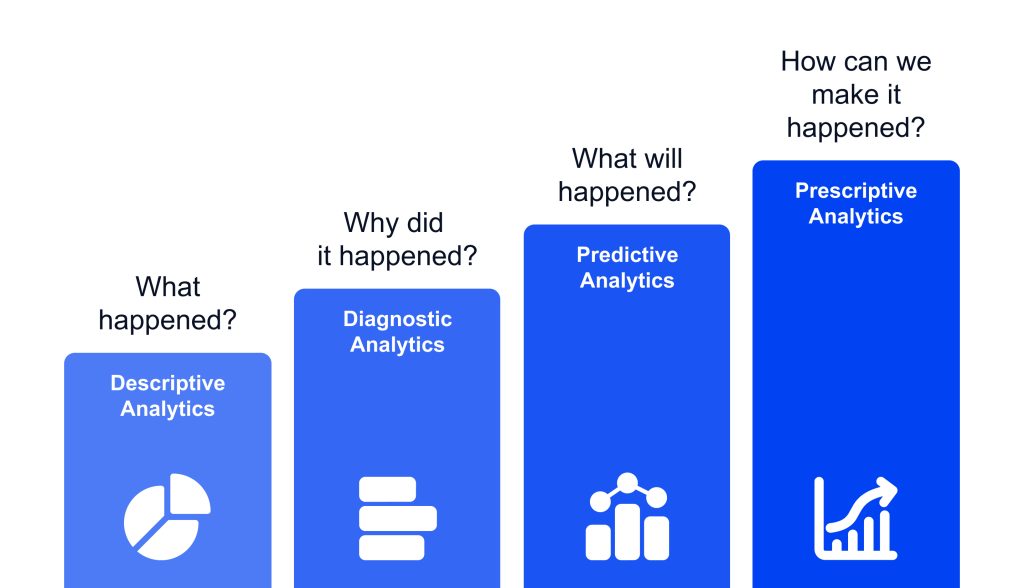
In healthcare, predictive and prescriptive work is usually enterprise-level. Most real “advanced” value for SME providers comes from strong diagnostic and temporal analytics, seeing what happened first, what followed, and where the process broke.
That’s exactly how readmission prevention improves. Quality and operations teams can pinpoint the gaps that often lead to avoidable returns: missed follow-ups, delayed medication reconciliation, unclear discharge education, or high-risk discharges with no care management touchpoint.
Clinical teams can spot risk patterns early and adjust support based on what happens in the first 7–14 days after discharge. Leaders can use the same insight to see which units, discharge destinations, or service lines drive the most downstream demand, then plan staffing and programs accordingly.
Advanced healthcare analytics brings together three areas into one view: clinical results (what happened to patients), operational actions (what we did and when), and financial effect (what it cost, what it saved, and what it changed).
Designing a platform from the ground up?
We are here to help. Check our
Healthcare Data Platform Development servicesWhy most initiatives fail
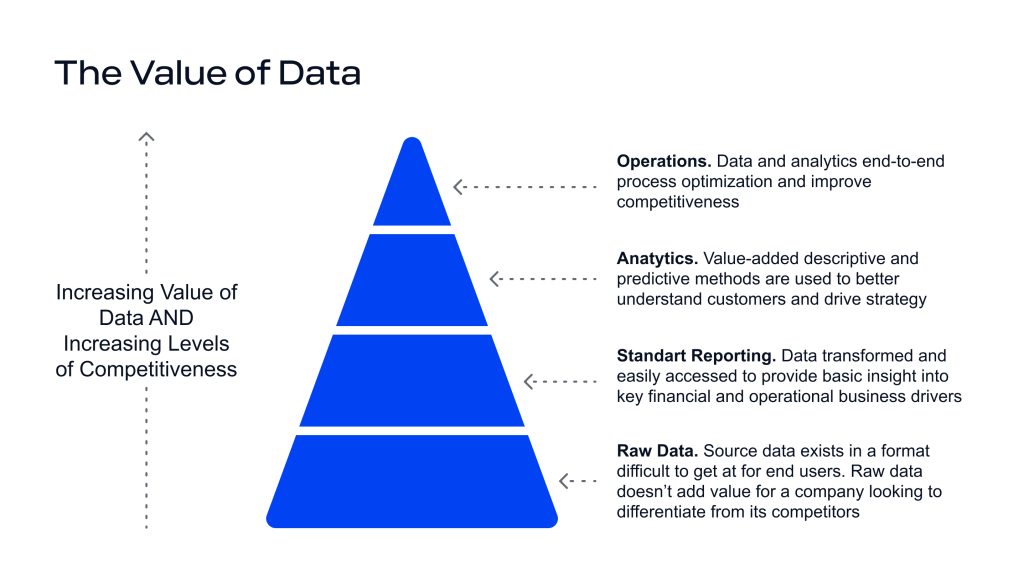
Most analytics initiatives fail for a simple reason: the data is not ready to be used the way healthcare leaders expect.
Data is fragmented across electronic health record (EHR) modules, labs, scheduling, referrals, pharmacy, care management, and claims. Patient identities don’t always match cleanly across systems. Many critical details live in unstructured notes or inconsistent fields.
Even when teams use standards like FHIR®, real implementations vary, mappings differ, and organizations still need a usable, consistent model for analytics. Add timing issues, late data, missing events, unclear definitions, and the result is slow, unreliable insight that quality teams can’t trust.
This is not a “small provider problem.” Big hospitals have problems, too, because just buying analytics solutions doesn’t immediately fix issues with data access, consistency, governance, and workflow fit. Advanced analytics will languish in pilots, dashboards that no one uses, or reports that come too late to stop readmissions unless the essentials are taken care of.
That’s where Edenlab helps. We help you put together healthcare data that is scattered so that analytics teams can use it every day for clinical, financial, research, and quality needs. The idea is to see real progress, with strong governance and compliance in place so that doctors and leaders can act swiftly without having to wait weeks for custom reports.
The real opportunity
Once healthcare data becomes analytics-ready, the impact changes fast, especially for small and mid-sized providers.
You can track readmissions in real-time. You can break down where the issue concentrates by condition, discharge pathway, and follow-up timing. You can compare care journeys, identify repeatable patterns behind returns, and target interventions to the patients and steps that matter most. You can also make decisions faster because quality and leadership teams can explore cohorts, drill down, and validate hypotheses without waiting for an analyst queue.
When the data foundation is in place, advanced analytics stops being a “big enterprise luxury” and becomes a practical capability that improves patient outcomes with data analytics, care efficiency, and management speed.
For organizations that require a self-serve layer on top of a robust data foundation, Edenlab also delivers medical analytics software development, including our own product, Kodjin Analytics. Kodjin is built to make complex healthcare data usable for day-to-day quality work.
It comes as an out-of-the-box platform that includes reporting UIs, an analytical data layer, a semantic layer, and a conversational AI interface, so teams can ask questions in natural language and get answers without SQL or IT support.

How Advanced Analytics Translates into Better Patient Outcomes
Advanced clinical analytics only matter if they change decisions and improve results. For quality teams, the impact should show up in practical terms: faster insight cycles, fewer avoidable events, smoother operations, and outcomes you can measure and defend.
In this article, we use readmission prevention as the core example because it’s one of the clearest places where better, faster insight can translate into fewer return visits, safer transitions of care, and stronger clinical and financial performance.
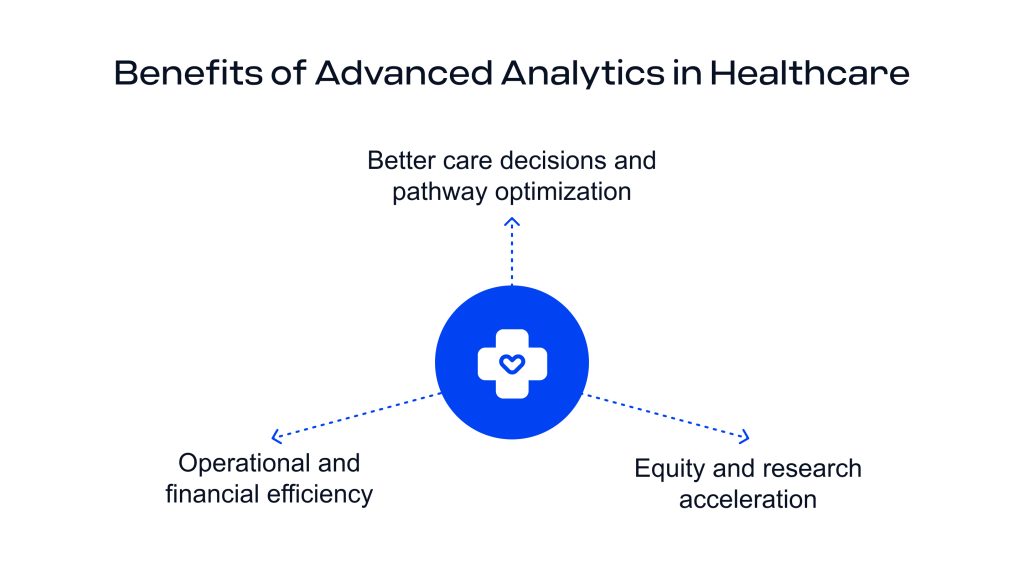
Better care decisions and pathway optimization
Readmissions rarely come from one “big mistake.” They come from small gaps that repeat across a pathway: missed follow-ups, unclear discharge plans, delayed medication reconciliation, or weak monitoring in the first 7-14 days. Advanced cohort and temporal analysis help you spot those gaps at scale and confirm which step drives the highest risk for a specific population.
Once you can see pathway breakdowns clearly, improvement work becomes more targeted. Teams can standardize what works, reduce delays, and lower preventable readmissions by focusing on the few interventions that actually move the metric. Clinicians and quality leaders can also test new pathway designs based on real outcomes data, then validate whether the change improved results for the right cohort, not just “on average.”
Operational and financial efficiency
Operational and financial efficiency often breaks down around readmissions. Teams rush to get discharge data from the EHR and match it with emergency department (ED) returns, admissions, claims, follow-up visits, medications, and care management notes. Then they argue about definitions (30-day window, planned vs. unplanned, index admission logic) and rebuild the same report every time leadership asks a new question.
Advanced analytics reduces that burden by making the readmission dataset consistent and reusable: one set of shared definitions, one longitudinal view of the episode, and a timeline that shows what happened before and after discharge. That also cuts IT dependency.
Quality and ops teams can self-serve answers like which service lines drive the highest 30-day readmission rate, where follow-ups are missing, how delays in medication reconciliation correlate with returns, or which discharge destinations see the most bounce-backs. The outcome is faster cost and utilization analysis, clearer staffing and capacity planning, and fewer disputes about “whose numbers are correct” because everyone works from the same unified view.
Equity and research acceleration
Advanced analytics also improves equity work around readmissions. Instead of focusing on one “average” 30-day readmission rate, quality teams can look at the information in more detail to find out who is being left behind. You can look at outcomes by language, neighborhood, payer mix, age, race/ethnicity (if available), or discharge destination.
Then you can link the gaps to genuine problems like missed follow-ups, trouble getting medications, transportation concerns, or not enough care management outreach. This way, differences show up sooner, help goes to the patients who need it most, and preventing readmission gets better for all groups, not just the ones that are easiest to reach.
For research and innovation teams, the value is speed and repeatability. With analytics-ready, longitudinal data, you can identify readmission cohorts in minutes, track the full post-discharge journey, and reuse the same study logic across units and time periods without new engineering each time. That shortens the path from hypothesis to evidence and helps clinical teams turn readmission insights into program changes faster.
How Edenlab Enables Analytics that Actually Work
Big data analytics in healthcare fail when they’re treated like a tooling problem. Edenlab approaches it as a capability build. We connect fragmented sources, make data consistent and trustworthy, and turn it into something quality teams can use in daily work without waiting on an analyst queue.
Enabling data for near-real-time analytics
Quality improvement depends on timing. If you only see trends weeks later, you lose the chance to intervene during the highest-risk window after discharge. Edenlab enables near-real-time analytics by designing data flows that capture changes as they happen, validate them, and keep the data available for operational analytics in healthcare. The goal is simple: let quality teams track readmission risk and pathway breaks while there’s still time to act, not after the month closes.
Preparing inconsistent healthcare data for analytics and AI
Most providers don’t have “one dataset.” They have multiple systems that describe the same patient and event in different ways. Edenlab prepares inconsistent healthcare data for analytics by standardizing structures, aligning definitions, and resolving gaps that break trust, so you can compare cohorts and outcomes without spending half the project arguing about the numbers.
This preparation is also what makes AI feasible. Models don’t fix messy inputs. They amplify them. Edenlab focuses on data readiness first, so advanced analytics and AI sit on clean, governed foundations instead of brittle pipelines.
A good example is Health Semantix, an advanced platform Edenlab helped shape to process health-related data using graph and AI-based analytics. It’s designed to highlight issues with data quality and consistency and deliver broader health insights.
The platform supports Primary Care Services, Specialty Care Services, and Research Services, including work tied to stem cell and alternative procedure research. Data is ingested from U.S. providers and payers, and the platform is designed to meet relevant U.S. regulations while developing core compliance capabilities that can be extended to other territories over time.
Find more healthcare analytics case studies here.
Making data accessible for non-technical users
Even with strong data engineering, analytics doesn’t improve outcomes if only a few technical specialists can use it. Edenlab focuses on access patterns that match how quality teams work: shared definitions, reusable cohort logic, guided exploration, and safe drill-down. That way, quality specialists can answer practical questions, such as where readmissions cluster, which pathway steps fail, and which follow-ups are missed, without turning every question into a ticket.
Building long-term data capabilities
Buying an analytics platform does not create a data capability. Sustainable improvement comes from repeatable foundations: consistent definitions, trusted data pipelines, governance that supports self-serve access, and workflows that match how quality teams work.
Edenlab takes a long-term approach here. We operationalize healthcare data across clinical, research, and financial domains, so the same data foundation supports readmission prevention, pathway optimization, cost analysis, and equity tracking.
A clear example is Kodjin Analytics, our own product built for “AI on FHIR®” analytics at scale. Its semantic layer turns nested FHIR JSON into query-optimized structures and business concepts, temporal reasoning for time-window questions, and near-real-time historization that captures every change and makes it available for analysis within seconds.
It also features a conversational interface for non-technical users and a privacy architecture that enables AI to work with semantic metadata, rather than exposing PHI, with HIPAA/GDPR-compliant controls and audit trails.
What matters most is how this becomes sustainable inside your organization. Edenlab bridges strategy and execution by helping teams:
- Align on shared metrics and cohort logic across departments, so everyone uses the same definitions.
- Reduce analyst and IT dependency by making data usable for quality, ops, and leadership users.
- Build internal competence through documented models, governance patterns, and repeatable workflows, so you don’t stay dependent on external support.
This is the partnership mindset: Edenlab helps you build a healthcare data capability your team can run and evolve over time.
Conclusion
The future of healthcare belongs to organizations that can transform data into actionable insights. The teams that consistently improve outcomes will be the ones that can spot issues earlier, understand what drives them, and respond with targeted changes instead of broad, slow initiatives. That’s especially true for readmissions, where timing matters and the “why” is usually hidden across multiple systems and steps in the care journey.
Advanced analytics is about readiness. When your data is accessible, consistent, and usable across the whole timeline of care, even a small or mid-sized provider can run enterprise-level analysis and make decisions with confidence. The payoff lies in faster insight cycles, fewer blind spots, more transparent accountability, and a safer path to AI because models rely on data you can trust.
Edenlab helps providers build that readiness and keep it sustainable. We operationalize healthcare data for near-real-time, AI-ready analytics, making it accessible to non-technical quality teams, and support long-term capability building so that analytics become part of daily improvement work, not a one-time project.

Privacy-first healthcare analytics, built for real-world use
We help providers turn messy data into actionable insights without cutting corners on compliance. Expect secure pipelines, access controls, audit trails, and governance that keeps PHI protected while quality teams move faster.
FAQs
What makes Edenlab’s approach different from standard analytics vendors?
Many vendors lead with the platform and assume your data will conform over time. Edenlab leads with data readiness and operationalization. We focus on making healthcare data usable across systems, aligning definitions that quality teams can trust, and setting up self-serve access that works in real workflows so analytics does not depend on a constant queue of ad hoc requests.
Do we need to replace our current systems?
In most cases, no. Edenlab typically works with your existing EHR and surrounding systems and builds the data layer, governance, and access patterns needed for advanced analytics on top. The aim is to reduce friction and improve how you use the data you already generate, not force a disruptive rip-and-replace.
Is it suitable for small or mid-sized organizations?
Yes. Edenlab’s approach is built for providers that need measurable outcomes improvements but do not have a large internal data and analytics function. The work is designed to deliver enterprise-grade capability with a scope and rollout path that fits SME budgets and team capacity.
How long does it take to start seeing value?
Many teams start seeing value once core data sources are connected, key metric definitions are aligned, and the first self-serve analytics workflows go live for the priority use case. The exact timeline depends on your current data maturity, the number of systems involved, and how clean and consistent your baseline data is today.
What are the four types of advanced analytics?
A common breakdown includes descriptive analytics, which show what happened; diagnostic analytics, which explain why it happened; predictive analytics, which estimate what is likely to happen next; and prescriptive analytics, which recommend what to do. In healthcare quality work, diagnostic and time-based analysis often creates early wins because it connects events across the care journey and points to pathway gaps that teams can fix.
Stay in touch
Subscribe to get insights from FHIR experts, new case studies, articles and announcements
Great!
Our team we’ll be glad to share our expertise with you via email